
Point-of-use treatment handles the water you actually drink and cook with. It is where certified contaminant reduction belongs, because treating a few gallons a day to a high standard is far cheaper and more effective than treating everything entering the house.
What this section covers
- Reverse osmosis: how it works, recovery ratios, tank and tankless systems
- Under-sink carbon blocks and how they differ from reverse osmosis
- Countertop systems and pitchers, and what they realistically achieve
- Remineralisation and pH after reverse osmosis
- Certification: NSF/ANSI 53, 58 and 401 and what each one covers
- Purchase cost, filter replacement cost and water waste
Choosing between the options
- Carbon block, under-sink – strong on chlorine, taste, odour and, when certified to NSF/ANSI 53, on specific contaminants such as lead. Does not reduce dissolved solids, nitrates or sodium.
- Reverse osmosis – the broadest reduction available for household use, including dissolved solids, nitrates, fluoride and many metals. Slower, sends some water to drain, and strips beneficial minerals unless remineralised.
- Countertop and pitcher filters – convenient and cheap, and genuinely useful for taste. Their certified claims are usually narrower than the marketing suggests; read the certification, not the box.
Read the certification, not the claim
The phrase to watch for is tested to NSF standards, which is not the same as NSF certified. A certified product is listed by the certifying body against a named standard for named contaminants. If a manufacturer cannot tell you the standard number and the specific contaminant claims, treat the claim as unverified.
Common questions
Does reverse osmosis waste a lot of water?
Traditional systems send several gallons to drain for every gallon produced. Modern high-recovery and tankless systems improve on this substantially. The ratio is a published specification; ask for it.
Is reverse osmosis water bad for you because it has no minerals?
Water Upkeep does not offer health advice. What we can say factually is that most dietary minerals come from food rather than water, and that remineralisation cartridges are widely available for anyone who prefers the taste of mineralised water.
Do I need both a whole-house filter and a drinking water system?
Often yes, because they do different jobs. See Whole-House Filtration.
Articles in this section
-
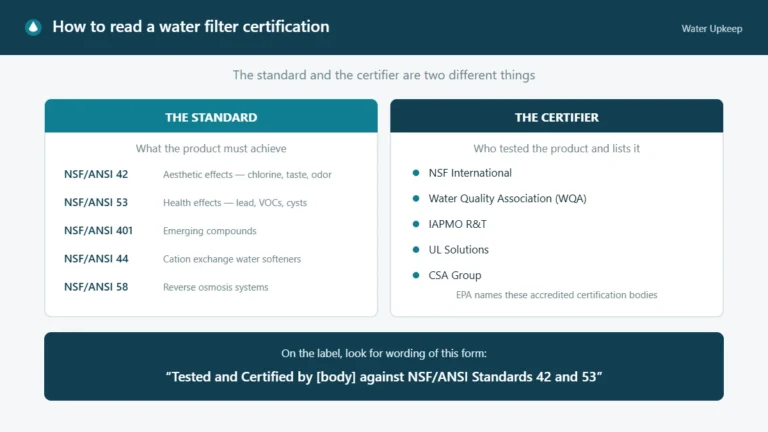
Do Brita Filters Work? What the Certifications Actually Say
Read article →: Do Brita Filters Work? What the Certifications Actually SayBrita filters are certified to reduce a specific published list of substances that differs sharply by model. Here is what each one is actually certified to…
-
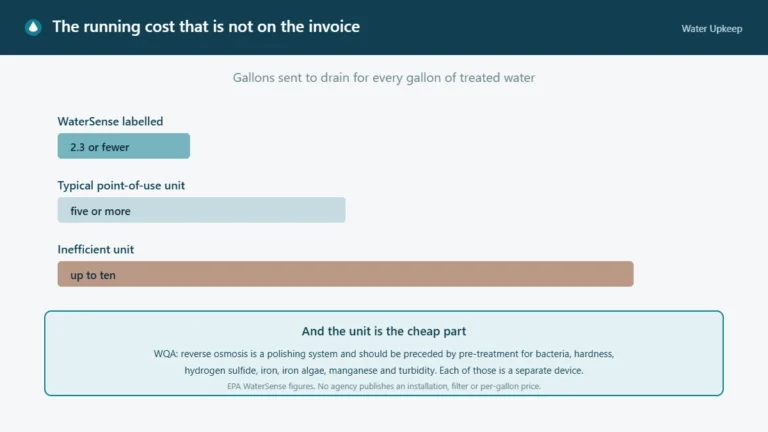
How Much Does a Reverse Osmosis System Cost?
Read article →: How Much Does a Reverse Osmosis System Cost?The unit is the cheap part. What decides the total is your feed water, the pre-treatment it demands, and the gallons that go down the drain…
-
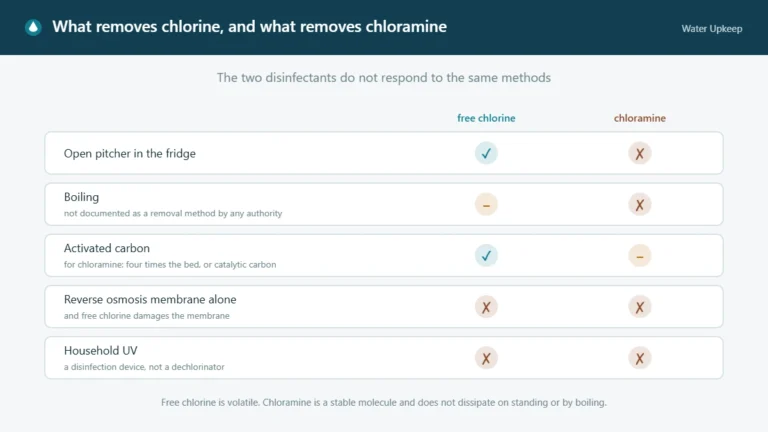
How to Remove Chlorine From Water
Read article →: How to Remove Chlorine From WaterFree chlorine leaves on its own. Chloramine does not — not by standing, not by boiling, and not by the reverse osmosis membrane. Find out which…
-
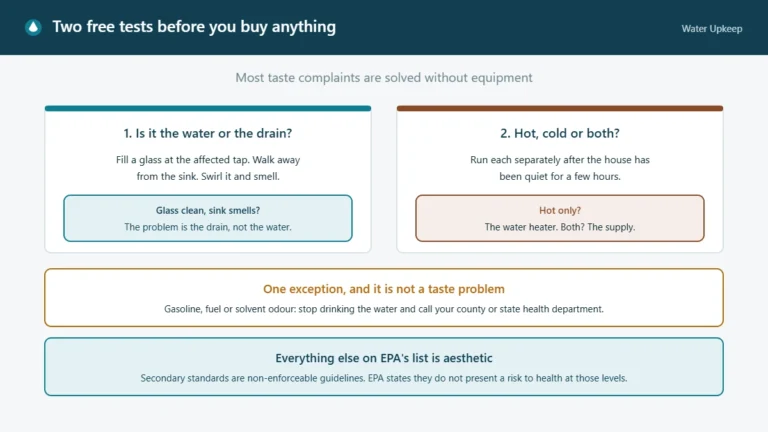
How to Make Water Taste Better
Read article →: How to Make Water Taste BetterChlorine, metal, salt, earth, rotten eggs — each has a different cause and a different fix, and several are not in the water at all. Two…
-
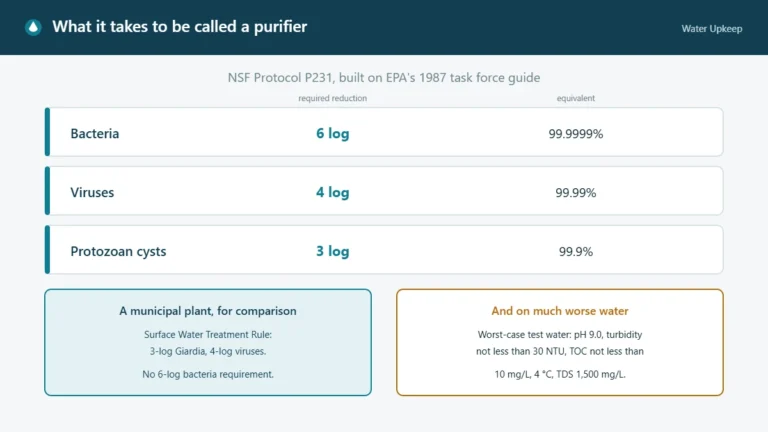
What Is a Water Purifier?
Read article →: What Is a Water Purifier?“Purifier” has no legal definition for a household device. One NSF protocol gives the word real meaning — and EPA says few devices can meet it.
-
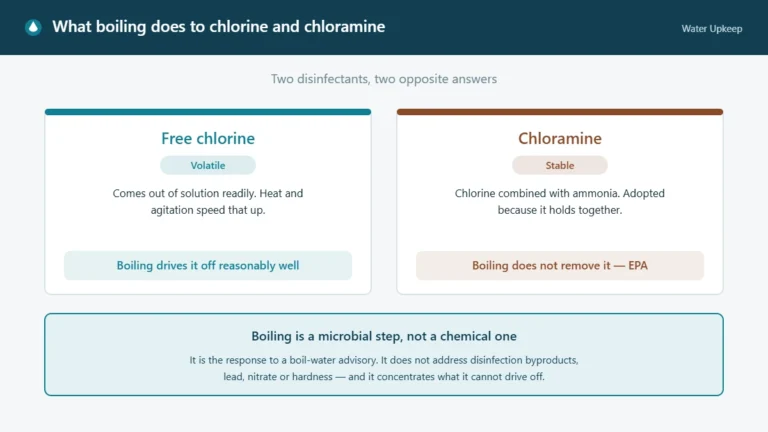
Does Boiling Water Remove Chlorine?
Read article →: Does Boiling Water Remove Chlorine?It depends which disinfectant your utility uses. Boiling drives off free chlorine, but EPA states plainly that it does not remove chloramine.
-
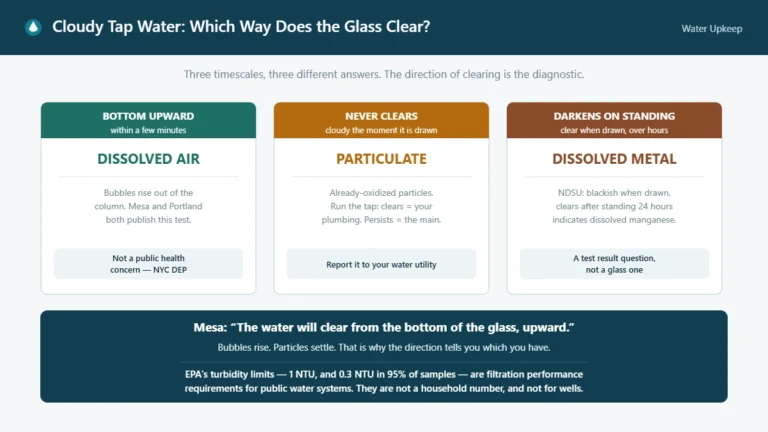
Why Your Tap Water Looks Cloudy
Read article →: Why Your Tap Water Looks CloudyThere is a two-minute test, and it turns on which direction the glass clears. Bottom-up means air. Here is what every other outcome means, and when…
-
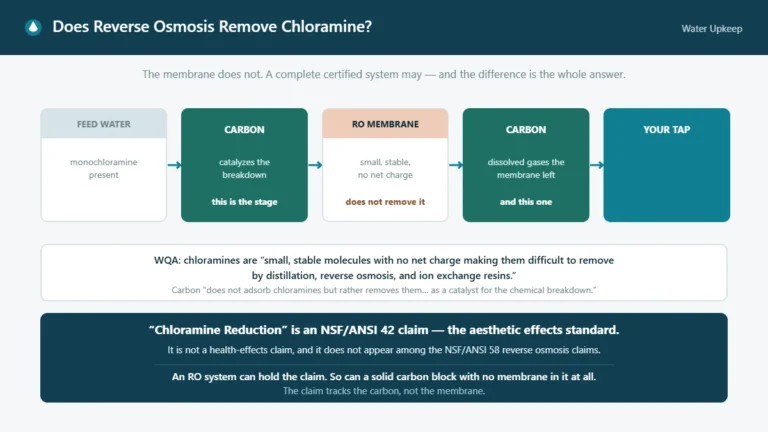
Does Reverse Osmosis Remove Chloramine?
Read article →: Does Reverse Osmosis Remove Chloramine?The membrane does not, but a complete certified system may — and the difference is the whole subject. What NSF listings actually show, and why the…
-
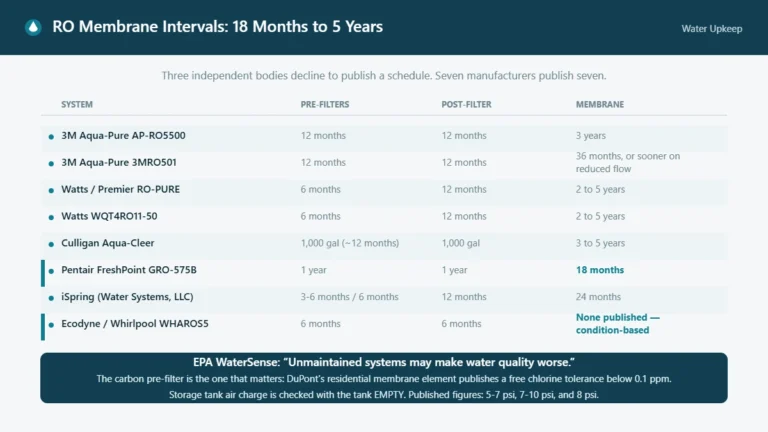
Reverse Osmosis Filter Replacement
Read article →: Reverse Osmosis Filter ReplacementThree independent bodies decline to publish an RO service schedule. Seven manufacturers publish seven — with membrane intervals from 18 months to 5 years, and one…
-
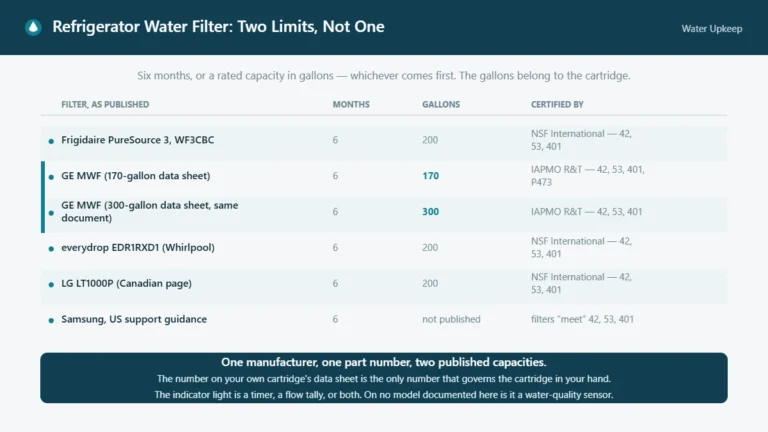
How Often to Change a Refrigerator Water Filter
Read article →: How Often to Change a Refrigerator Water FilterEvery manufacturer publishes two limits, not one: a calendar interval and a rated capacity in gallons, whichever comes first. Here are the published figures by model,…
Related sections
Last reviewed September 6, 2026.