
Most water treatment equipment does not fail suddenly. It drifts out of adjustment, runs out of a consumable, or clogs, and the symptoms appear weeks later as returning hard water, falling pressure or a smell. This section covers routine maintenance and the diagnostic steps for the faults homeowners actually meet.
What this section covers
- Monthly, seasonal and annual maintenance by equipment type
- Softener faults: salt not being consumed, salt bridging, brine tank full of water, hard water returning
- Control valve errors and regeneration settings
- Resin, media and cartridge replacement
- Falling pressure, leaks and bypass valve problems
- Sanitising a system after service
Before you start any work
- Close the inlet valve or put the system into bypass before opening anything.
- Relieve pressure at a downstream tap before loosening a housing or fitting.
- Anything involving the incoming main, gas, or electrical supply to a water heater is work for a licensed professional. Water Upkeep does not publish instructions for it.
- If you are unsure whether a task is within your competence, it is not.
The three questions that solve most problems
- Is the system in bypass? A bypass valve knocked or left over after service is the single most common cause of hard water returning with no other symptom.
- Is the consumable actually being used? Salt that never goes down, or a cartridge that looks new after six months, usually means water is not passing through the system as intended.
- Has anything changed upstream? New plumbing work, a repaired main, a different season on a well, or a change of supply can all shift water chemistry enough to change how equipment behaves.
Common questions
My softener is not using any salt. Is it broken?
Not necessarily. The usual causes, in order of likelihood, are the system sitting in bypass, a salt bridge holding a crust above an empty space, a metered valve set to a demand that is never reached, and only then a genuine valve or injector fault.
There is standing water in my brine tank. Is that normal?
A few inches is normal on many models between regenerations. A tank filling steadily or overflowing points to a blocked injector, a stuck brine valve, or a drain line restriction.
How often should resin be replaced?
Typically every eight to ten years on municipal water, sooner where chlorine or iron is present. Falling capacity despite correct settings and adequate salt is the usual sign.
When should I stop and call a professional?
Any work on the incoming main, any suspected leak inside a wall or ceiling, any electrical fault, and any bacteria result. Also whenever the fix would need a permit in your jurisdiction.
Articles in this section
-
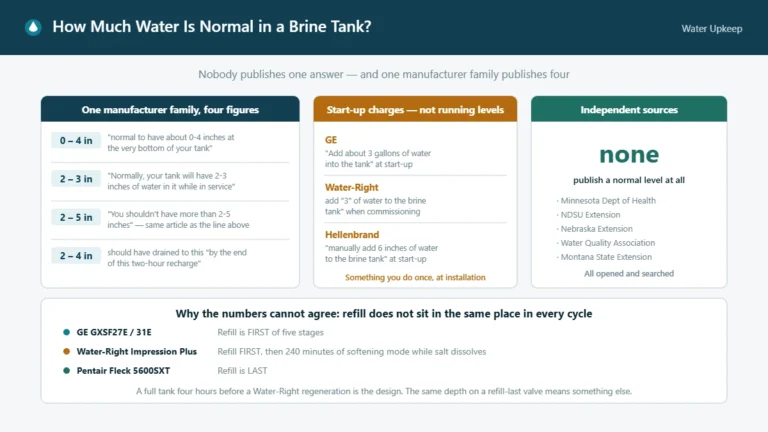
Why Your Water Softener Is Full of Water
Read article →: Why Your Water Softener Is Full of WaterWater in the salt tank is usually the brine supply, put there on purpose. It is a fault when it stands above your manufacturer’s published level…
-
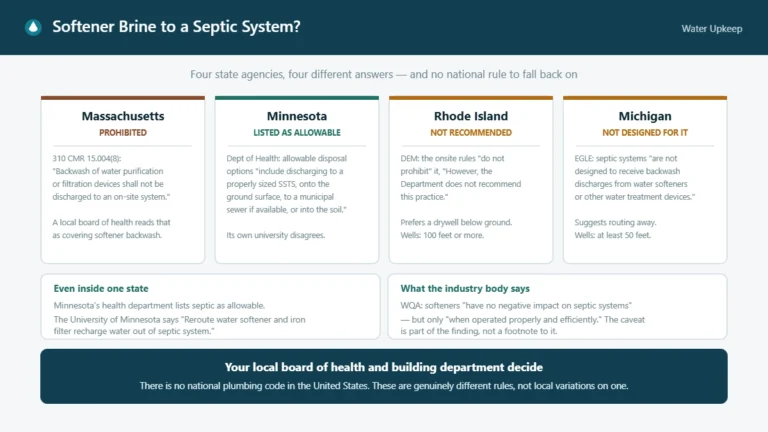
Where a Water Softener Drain Line Can Discharge
Read article →: Where a Water Softener Drain Line Can DischargeWhere a softener drain may discharge is set by state and local code, and there is no national one. The air gap, the septic disagreement, and…
-
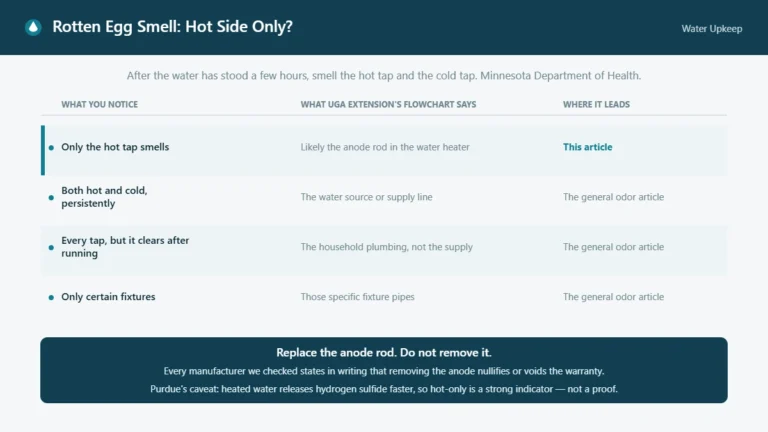
Only the Hot Water Smells Like Sulfur
Read article →: Only the Hot Water Smells Like SulfurHot-side-only rotten egg smell points at the sacrificial anode rod in your water heater. Here is the mechanism from five sources, the warranty language on removal,…
-
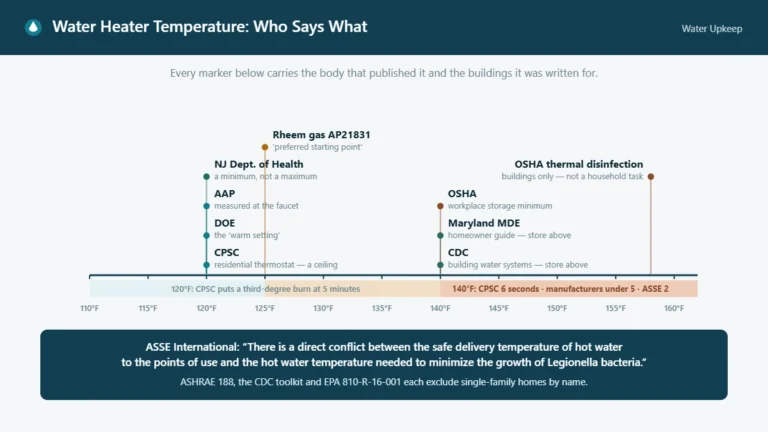
What Temperature Should a Water Heater Be Set To?
Read article →: What Temperature Should a Water Heater Be Set To?CPSC urges 120°F to prevent scalds. CDC building guidance calls for hotter water to control Legionella. A standards body calls it a direct conflict. Here is…
-
How to Flush a Water Heater
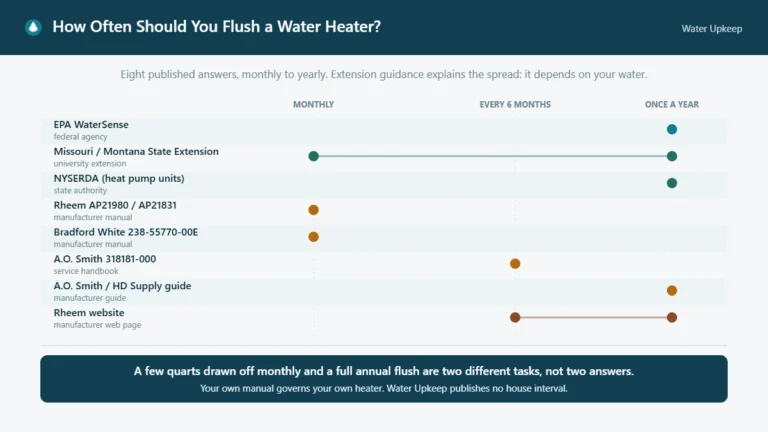
Read article →: How to Flush a Water HeaterEPA says once a year, but the manufacturers say monthly to six-monthly and extension guidance says it depends on your hardness. The intervals, the procedure, and…
-
How to Bypass a Water Softener
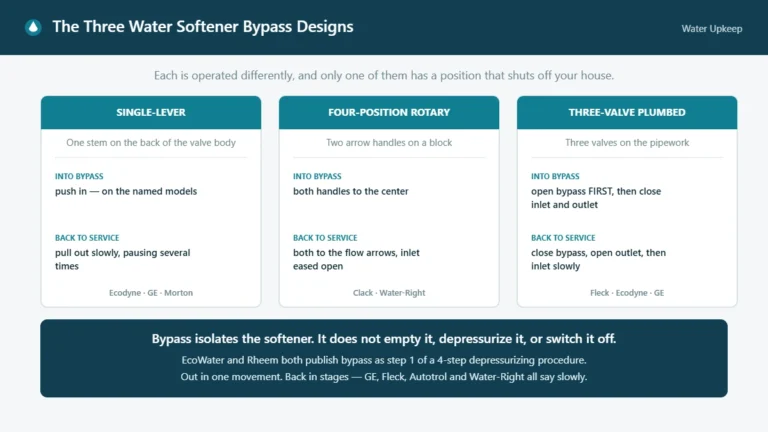
Read article →: How to Bypass a Water SoftenerBypass sends water around the softener instead of through it. Here are the three valve designs, the published order for each, and the three things bypass…
-
When Water Softener Resin Needs Replacing
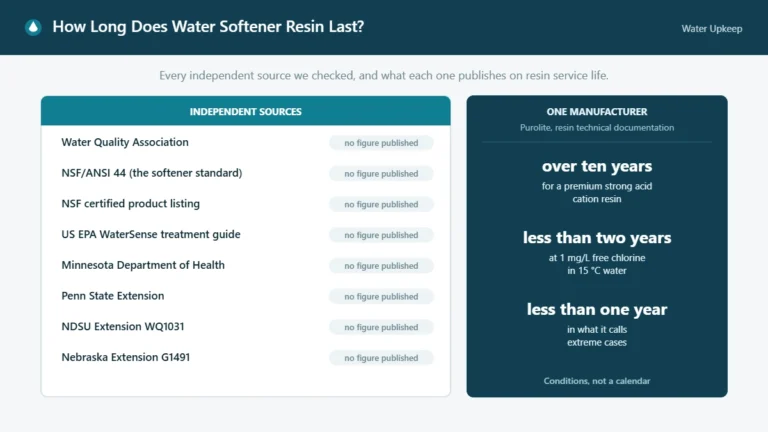
Read article →: When Water Softener Resin Needs ReplacingNo independent authority publishes a service life for softener resin. Here is what each source actually says, how resin really degrades, and how to tell whether…
-
Water Softener Troubleshooting by Symptom
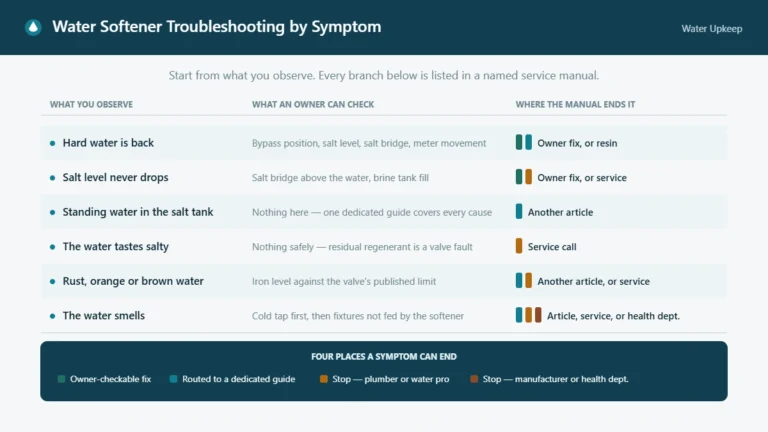
Read article →: Water Softener Troubleshooting by SymptomStart from what you can see. A symptom-by-symptom index built from the Fleck and Clack service manuals, separating what an owner can check from what needs…
-
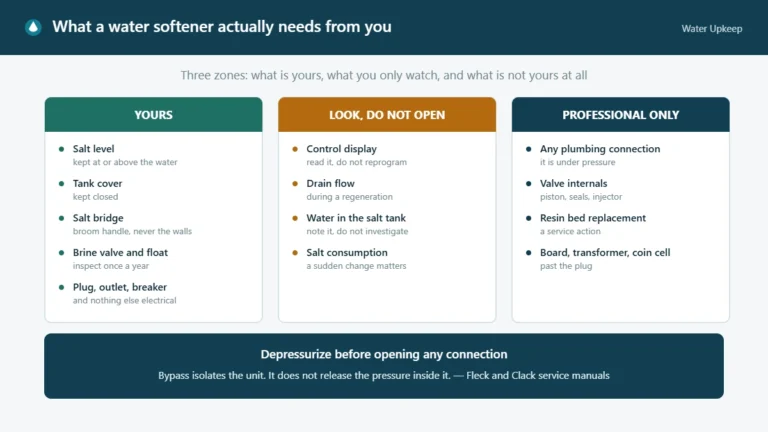
Water Softener Maintenance: What Actually Needs Doing
Read article →: Water Softener Maintenance: What Actually Needs DoingA water softener needs less routine attention than dealer pages imply. Here is what genuinely needs a calendar, what needs your manual, and what needs a…
Related sections
Last reviewed September 6, 2026.