
A whole-house filter treats water where it enters the building, so every tap, shower and appliance receives the same treated water. It is the right tool for chlorine and chloramine taste and smell, sediment, and general aesthetic quality. It is not a softener and it is not a substitute for point-of-use treatment where a specific contaminant has to be reduced to a certified level.
What this section covers
- Media types: catalytic and standard carbon, KDF, sediment and backwashing filters
- Sizing by service flow rate and pressure drop, not by household size alone
- Filter order: what goes first when you combine sediment, carbon and softening
- Cartridge and media replacement intervals and real running costs
- Certification: what NSF/ANSI 42 covers and what it does not
Which filter does what
- Sediment filter – removes sand, silt, rust particles and turbidity. Protects everything downstream. Rated in microns.
- Carbon filter – reduces chlorine, taste and odour, and many organic compounds. Catalytic carbon is used where chloramine is present, because standard carbon handles chloramine poorly.
- KDF media – a copper-zinc alloy often paired with carbon; used to extend carbon life and control bacterial growth in the bed.
- Backwashing filter – a tank-based filter that periodically flushes itself, so there are no cartridges to change.
Getting the size right
The mistake that causes most complaints about whole-house filters is undersizing. A filter that is too small for the flow rate causes a pressure drop you will feel in every shower. Size on peak simultaneous demand in gallons per minute and on the manufacturer stated pressure drop at that flow, not on the number of bathrooms alone.
If your water is also hard, the filter and the softener are two different jobs done by two different pieces of equipment. See Water Softeners. If you are on a private well, sequence and media selection change substantially – see Well Water.
Common questions
Does a whole-house filter remove lead?
Only if it is certified to do so. Lead reduction is covered by NSF/ANSI 53, and most whole-house carbon filters are certified to NSF/ANSI 42 for aesthetic effects only. Where lead is the concern, a certified point-of-use filter at the drinking tap is the usual approach. See Drinking Water.
Will it fix hard water?
No. Carbon and sediment filtration do not reduce hardness.
How often do cartridges need changing?
It depends on the medium, the contaminant load and your water use, not on the calendar alone. Manufacturer intervals assume typical municipal water; heavy sediment or high chlorine shortens them.
Articles in this section
-
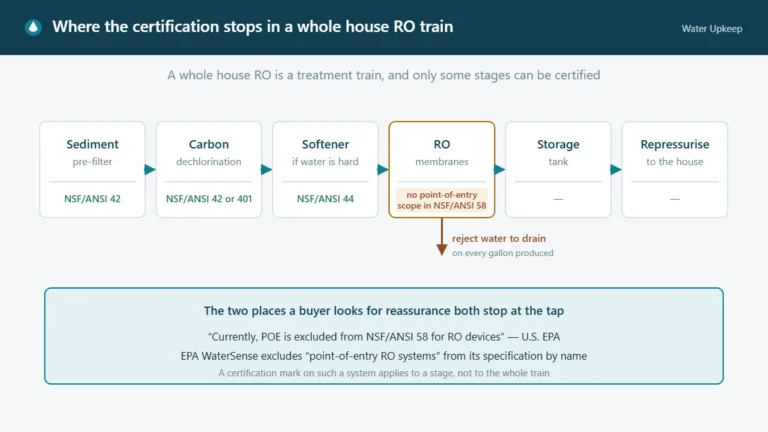
Whole House Reverse Osmosis System: Why the Standard Excludes It
Read article →: Whole House Reverse Osmosis System: Why the Standard Excludes ItNSF/ANSI 58 has no point-of-entry scope and EPA WaterSense excludes whole house RO by name. Here is what that means before you price one.
-
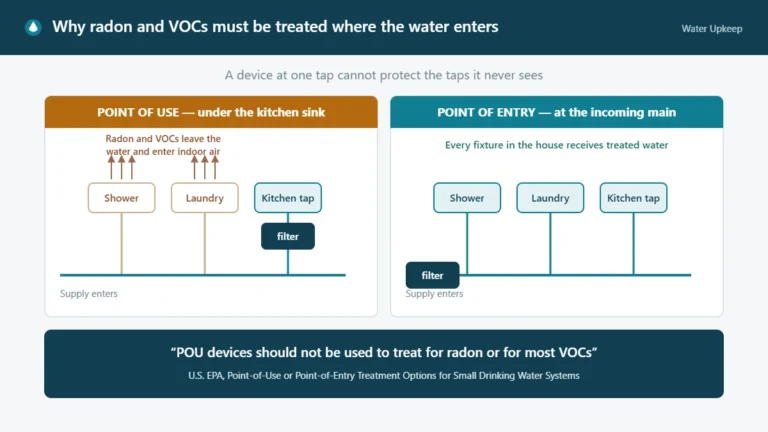
Whole House Water Filter: When Point-of-Entry Is Actually Required
Read article →: Whole House Water Filter: When Point-of-Entry Is Actually RequiredEPA says point-of-use devices should not be used for radon or most VOCs. That is the one case where a whole house filter is required rather…
-
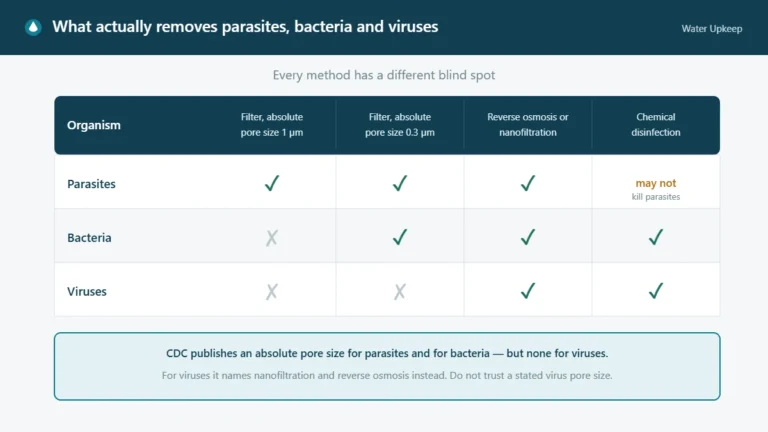
How to Filter Water at Home: Match the Method to the Problem
Read article →: How to Filter Water at Home: Match the Method to the ProblemThere is no all-purpose home water filter. Here is how to find out what is in your water, then match carbon, RO, UV, softening or sediment…
-
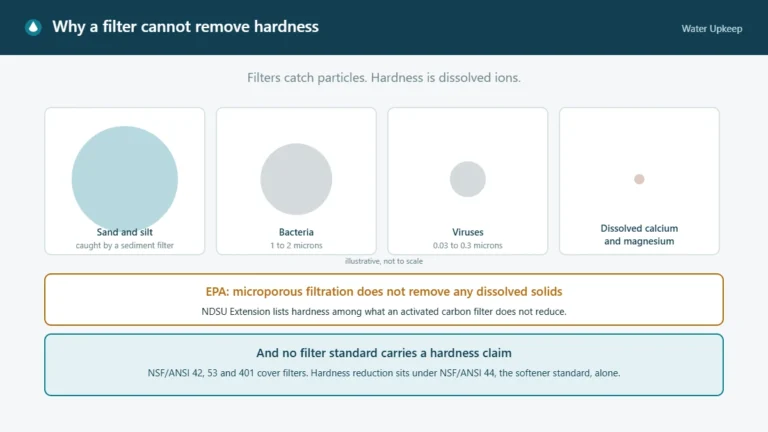
Is There Such a Thing as a Hard Water Filter?
Read article →: Is There Such a Thing as a Hard Water Filter?Hardness is dissolved calcium and magnesium, and filters catch particles. Here is why no filter standard carries a hardness claim, and what the products sold under…
-
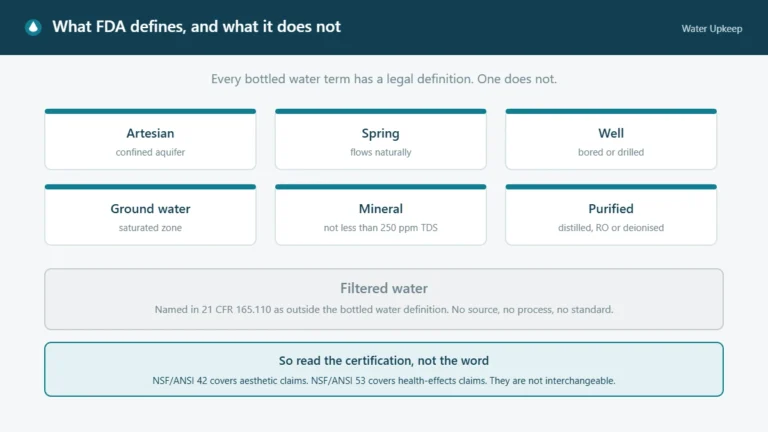
What Is Filtered Water?
Read article →: What Is Filtered Water?Filtered water has no legal definition — FDA names it as outside the bottled water rules. Here is what the defined terms mean, and what each…
-
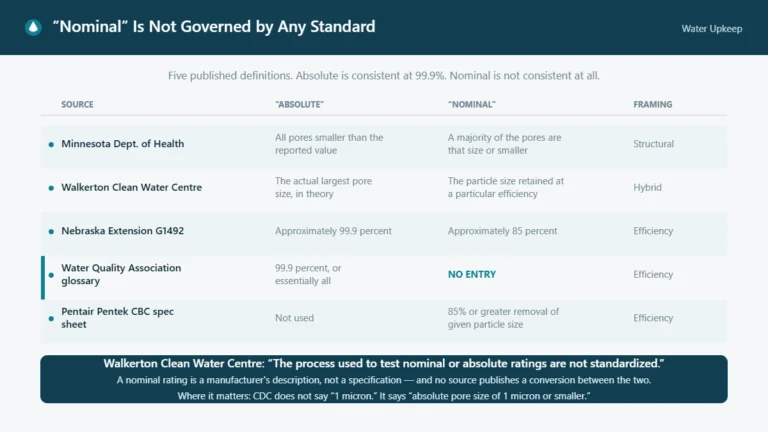
What Micron Rating Does Your Water Filter Need?
Read article →: What Micron Rating Does Your Water Filter Need?The word “nominal” is not governed by any standard — an Ontario government agency says the test methods are not standardized. Four published definitions compared, plus…
-
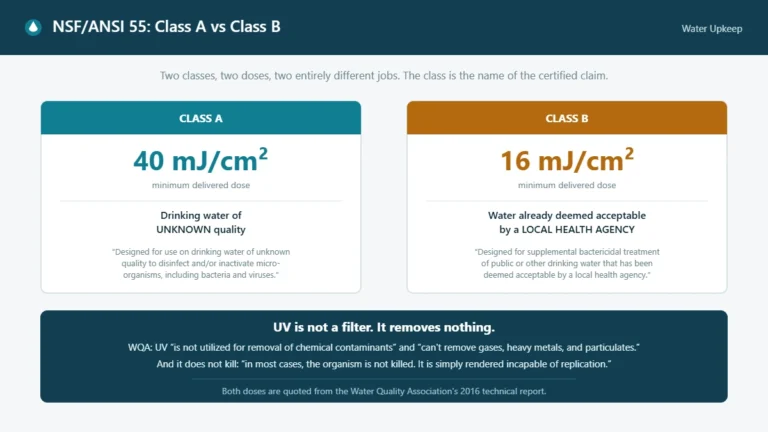
UV Water Disinfection: NSF/ANSI 55 Class A vs Class B
Read article →: UV Water Disinfection: NSF/ANSI 55 Class A vs Class BA UV system is not a filter and it removes nothing. NSF/ANSI 55 has two classes with two doses and two different jobs — here is…
-
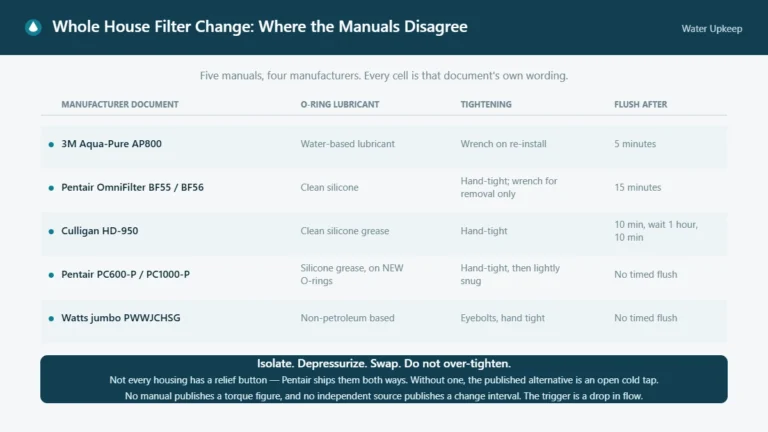
How to Change a Whole House Water Filter
Read article →: How to Change a Whole House Water FilterIsolate, depressurize, swap, and do not over-tighten. Five manuals from four manufacturers, the four points where they disagree, and the honest answer when the housing will…
Related sections
Last reviewed September 6, 2026.