
Private wells are not treated or monitored by a utility, so the owner is responsible for knowing what is in the water and for treating it. Well water problems are usually a combination rather than a single fault: iron and hardness together, or sulfur smell with bacteria, or low pH with staining. Getting the order of treatment right matters more here than anywhere else in the house.
What this section covers
- Iron and manganese: staining, oxidation and filter selection
- Hydrogen sulfide: the rotten-egg smell, where it comes from and how it is treated
- Bacteria: what a positive coliform result means and what shock chlorination does
- Low pH and corrosion: neutralising media and blue-green staining
- Nitrates, tannins and arsenic
- Sediment and pre-filtration, and the correct treatment sequence
Start with a test, not a product
Well water treatment cannot be specified from symptoms alone. A certified laboratory panel that covers hardness, iron, manganese, pH, total dissolved solids, coliform bacteria and nitrate is the minimum starting point, and it should be repeated at least annually. Choosing equipment before testing is the most expensive mistake made in this niche. See Water Testing.
Reading your symptoms
- Orange or brown staining – iron, usually. The right filter depends on whether the iron is dissolved or already oxidised.
- Black specks or grey staining – manganese, often alongside iron.
- Rotten-egg smell – hydrogen sulfide, sometimes produced in the water heater rather than the well.
- Blue-green staining on fixtures – low pH corroding copper plumbing.
- Cloudy water that clears from the bottom up – air, not sediment.
- Scale as well as staining – hardness and iron together; a softener alone is often the wrong answer. See Water Softeners.
Important
Water Upkeep publishes equipment and treatment information, not medical advice. If a laboratory result shows bacteria, nitrates above the EPA maximum contaminant level, arsenic or any other health-related exceedance, contact your state or local health department for guidance before relying on any treatment product.
Common questions
How often should a private well be tested?
At minimum annually for coliform bacteria, nitrate, total dissolved solids and pH, and after any flooding, repair work or noticeable change in taste, smell or appearance.
Does a softener remove iron?
Softeners tolerate small amounts of dissolved iron and are frequently used that way, but iron fouls resin and shortens its life. Where iron is significant, a dedicated iron filter ahead of the softener is the normal arrangement.
Will chlorinating the well fix a bacteria result permanently?
Shock chlorination disinfects the well and plumbing, but it does not fix the reason bacteria got in. A repeat positive after shock chlorination points to a construction or contamination problem that needs a licensed well contractor.
Articles in this section
-
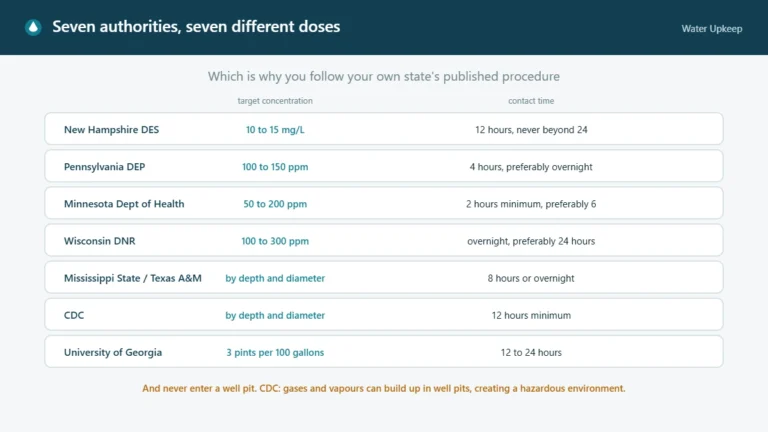
How to Shock a Well
Read article →: How to Shock a WellSeven state and federal authorities publish this procedure and their doses differ by up to fifty-fold. Here is the shape of the job, the safety rules…
-
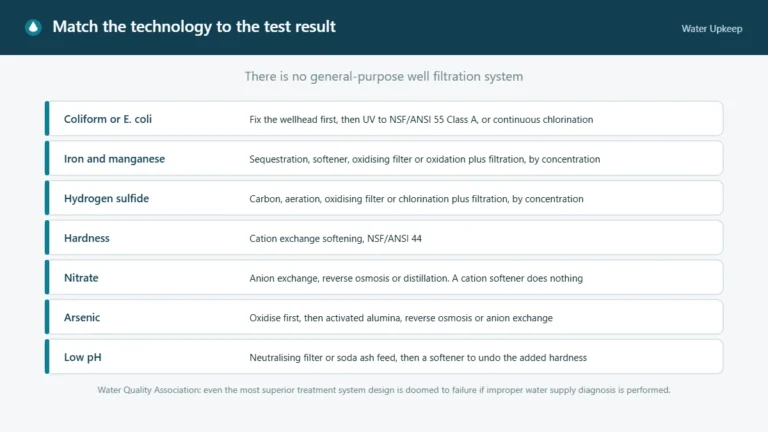
Choosing a Well Water Filtration System
Read article →: Choosing a Well Water Filtration SystemThere is no general-purpose well filtration system — only technologies matched to findings. Here is what to test for, what each result calls for, and why…
-
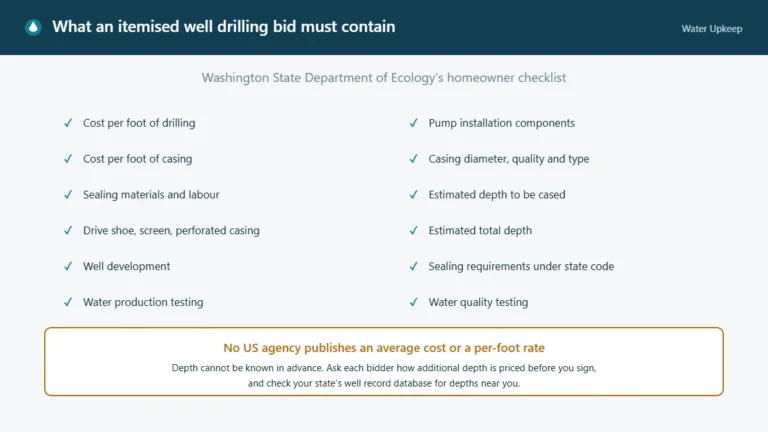
How Much Does It Cost to Drill a Water Well?
Read article →: How Much Does It Cost to Drill a Water Well?No US agency publishes an average or a per-foot rate, and three state agencies explain why. Here are the cost drivers, the two verified regional figures,…
-
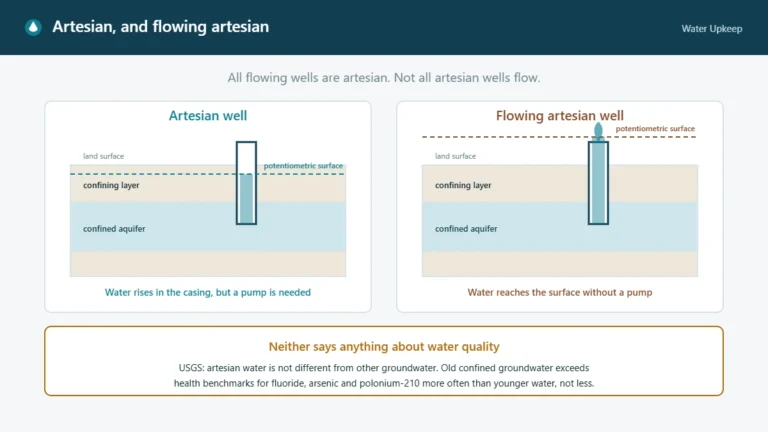
What Is an Artesian Well?
Read article →: What Is an Artesian Well?Artesian describes a pressure condition, not water quality. Here is what it actually means, why flowing and artesian are different, and what USGS found in old…
-
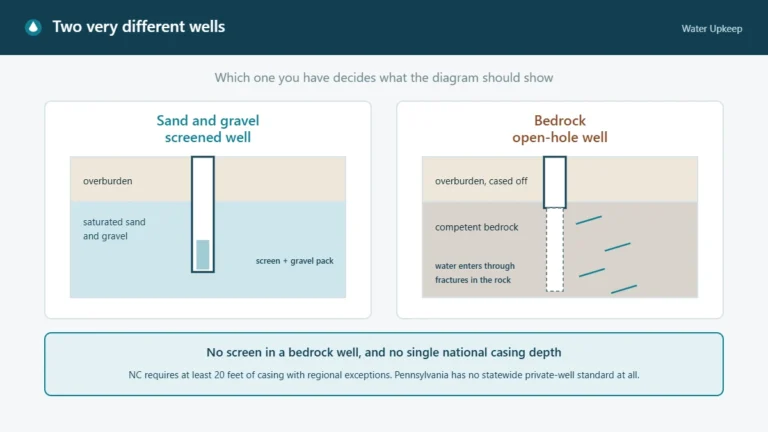
How Does a Well Work?
Read article →: How Does a Well Work?From the water table to your tap: what each part of a private well does, how the pump and pressure tank work together, and why no…
-
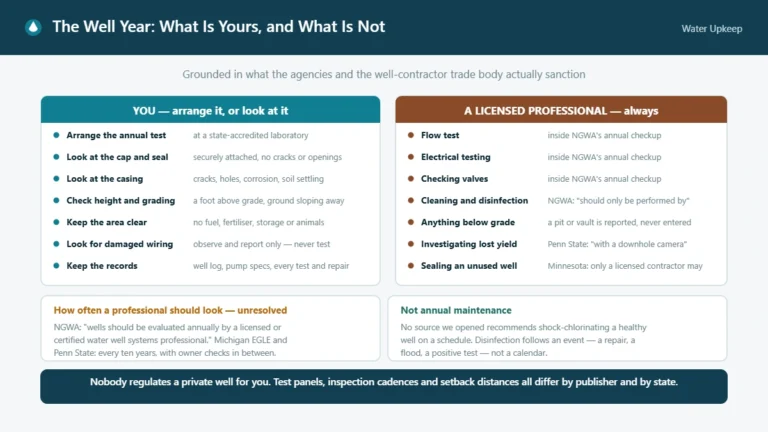
Annual Well Maintenance: What Actually Needs Checking
Read article →: Annual Well Maintenance: What Actually Needs CheckingTest yearly, look at the wellhead, keep the records, and hand the rest to a professional. What each agency actually publishes — and why routine annual…
-
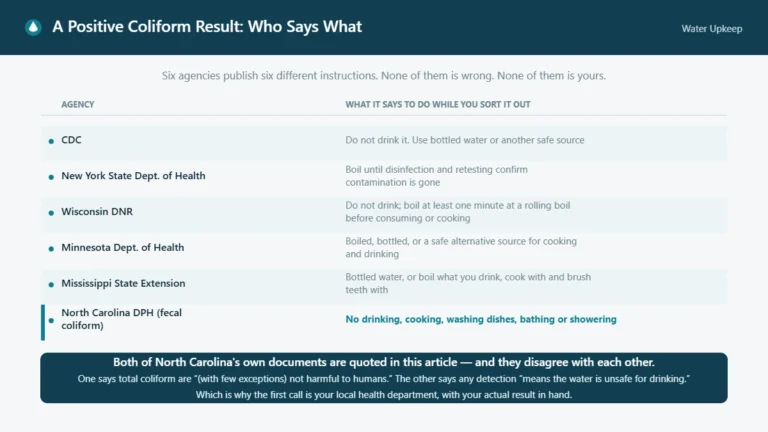
A Positive Coliform Test on Your Well
Read article →: A Positive Coliform Test on Your WellTotal coliform and E. coli mean different things, and the agencies disagree about what your result means. The published positions, the order the sources actually recommend,…
-
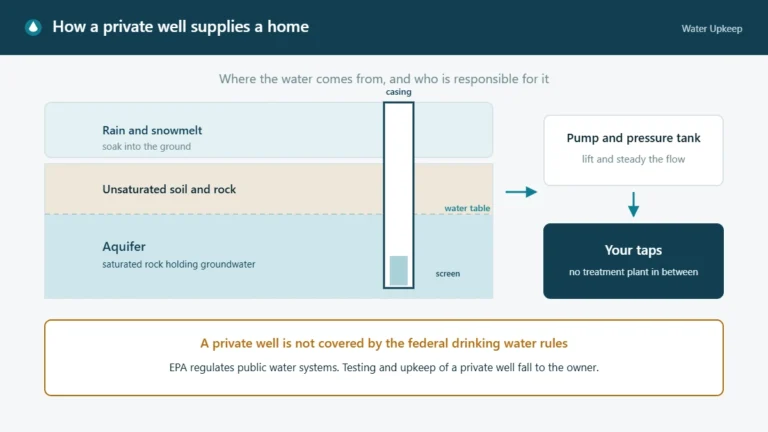
What Is Well Water? A Homeowner Guide
Read article →: What Is Well Water? A Homeowner GuideWell water is groundwater drawn from an aquifer. The essential point is regulatory: private wells sit outside federal drinking water rules, so testing is the owner’s…
-
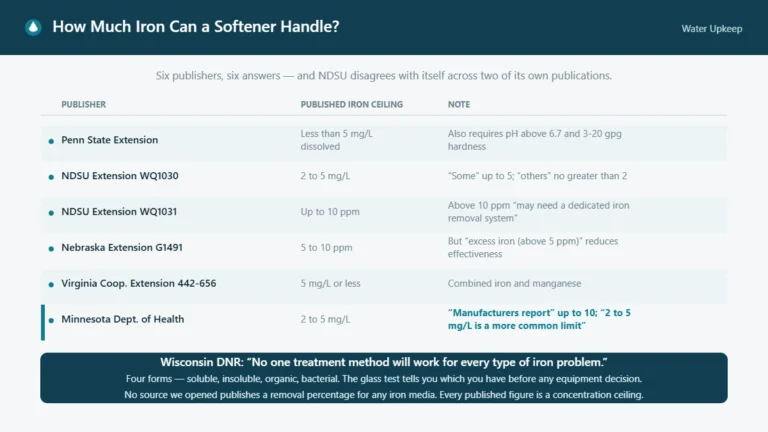
How to Remove Iron From Well Water
Read article →: How to Remove Iron From Well WaterThere are four forms of iron and no single treatment covers them all. Start with the glass test, then read the published ceilings — which disagree…
Related sections
Last reviewed September 6, 2026.